
In addition to that, the SoC comes with a video decoder that supports 8/10 bit analog inputs or HDMI/DVI digital inputs (including HDMI 1.3, 1.4 3D), a USB 2.0 host controller, Ethernet MAC, on-screen display menu controller and an ARM9 processor, which allows you to enable projector vendors to use custom applications.
According to Senior Vice President of Pixelworks Graham Loveridge, "Current projector technology is undergoing a significant transition as more diverse and sophisticated applications become available, creating expanded opportunities for our newest family of products. The evolution in illumination engines and light source technology is migrating from traditional lamp-based light sources to LED and laser technologies, which will enable a lower cost of ownership as well as more compact and portable designs."
Pixelworks has yet to unveil any specific products that will feature the company's new SoC, though Pixelworks did say that the new SoC is targeted at mainstream LCD and DLP projectors for the education and business markets, as well as for use in the home theater market, which means that there could be a large assortment of projectors that will be utilizing Pixelworks' new SoC.
Source: Tom's Hardware - Pixelworks Launches SoC for Next-Gen LED, 3D Projectors
 Find out what is going on in the Tech Army World.
What are the Top 10 Money Making Missions?
What other companies have joined and what do they do?
How do I join the Tech Army Organization ?


 Sony has just recently launched its all new VPL-VW1000ES projector, claiming that this device is the world's first 4K projector, meaning it's pushing around 10,000,000 pixels. The company is also touting this device as its flagship projector and has currently only released the device in India. Whether or not it will make its way to other countries any time soon (if at all) still remains to be seen as Sony hasn't disclosed any information on that front just yet..
 At the Consumer Electronics Show (CES) in Las Vegas, Vivitek showed off an early look at their upcoming Qumi Q5, the latest addition to the company's popular line of DLP pocket projectors. Not a lot was revealed about the device but what was divulged was that Qumi Q5 will have a native 1,280 x 800 WXGA resolution as well as a 500 lumen output.
 Pico projectors currently have the ability to turn any surface into a screen. However, what they can't do is turn that same surface into an interactive projector screen and average, everyday items into a remote control. Until now. Developed by a team from the Technische Univerität Darmstadt in Germany, LightBeam pairs a pico projector with a depth-sensing camera. This allows it to provide a lot of interactive features, much like Microsoft's Kinect sensor, to projected presentations.

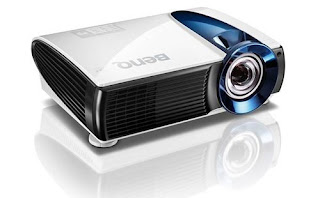 BenQ America, one of the most popular projector manufacturers in the country, has just unveiled an all new pair of short-throw video projectors specifically designed for use in the education industry. In addition to that, both of the new projectors use mercury-free blue core light engines for increased safety and environmental friendliness.
 Renting projectors for meetings, events, trade shows, and projectors is easy at


 One of the coolest new pieces of tech at CES 2012, at least in the projector world that is, is the LightPad, a pico projector combined with a keyboard and trackpad. All you have to do to make this thing work is plug your phone into the device and it beams whatever is on your screen to a nearby wall. However, that isn't the coolest part. The main feature for the LightPad is that you can flip the lid up and turn it into a makeshift laptop with software that adds a virtual mouse.
